The “Expectation” rule in the animation principles is to make the audience anticipate the upcoming plot through the actions of the characters.
I chose the animation clip from Wallace & Gromit: A Grand Day Out (1989) by Aardman Company. This is a stop-motion animation. The animation clip depicts the plot where the protagonist, Wallace, designs rocket blueprints in the basement and plans to have a picnic on the moon.
In the scene, Wallace is sitting at the desk, thinking about how to design the rocket. However, he didn’t start by concentrating on the design right away; instead, he got distracted first. The animator used a large number of subtle movements to show Wallace’s distracted state of mind.
The clip shows several of Wallace’s actions: First, he picked up the pencil sharpener and began to sharpen the pencil. After drawing a picture, a very dissatisfied expression appeared on his face, and he pulled out a new piece of drawing paper. After thinking for a while, he drew a new picture. However, the director added a humorous plot in this scene: He drew a tic-tac-toe board instead of a rocket design plan. After finishing this picture, Wallace raised his right hand and made a confident gesture, and then took out a new piece of drawing paper to draw again. This time, the extent of his drawing movements also increased, and finally, he designed a rocket blueprint.
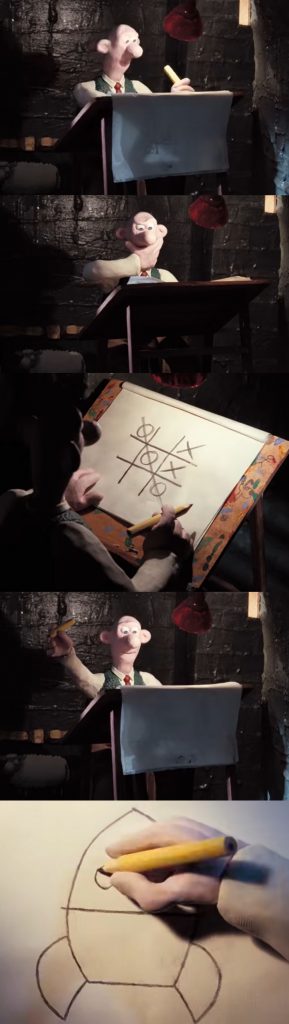
I believe that Wallace’s actions in this scene conform to the “expectation” aspect of animation principles in two ways:
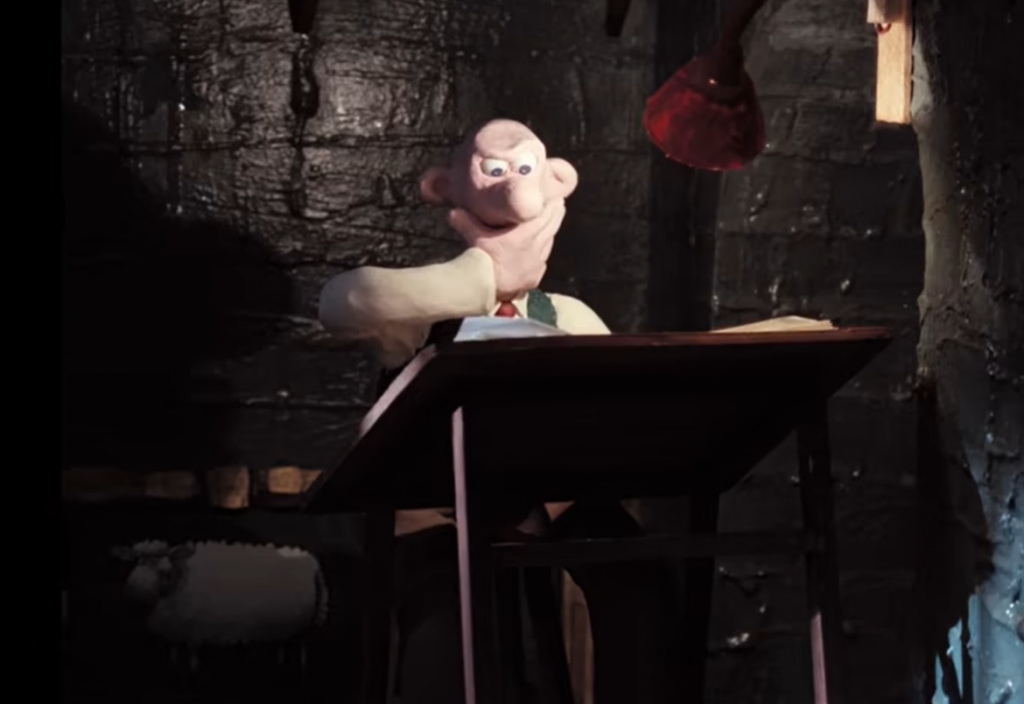
1. The director added some actions ( Wallace covering the mouth with hands and thinking) to make the audience believe that Wallace designed the rocket while drawing again. In the end, however, Wallace only drew a tic-tac-toe grid instead of designing. This contrast creates humor as Wallace’s actions and expressions deceive the audience.
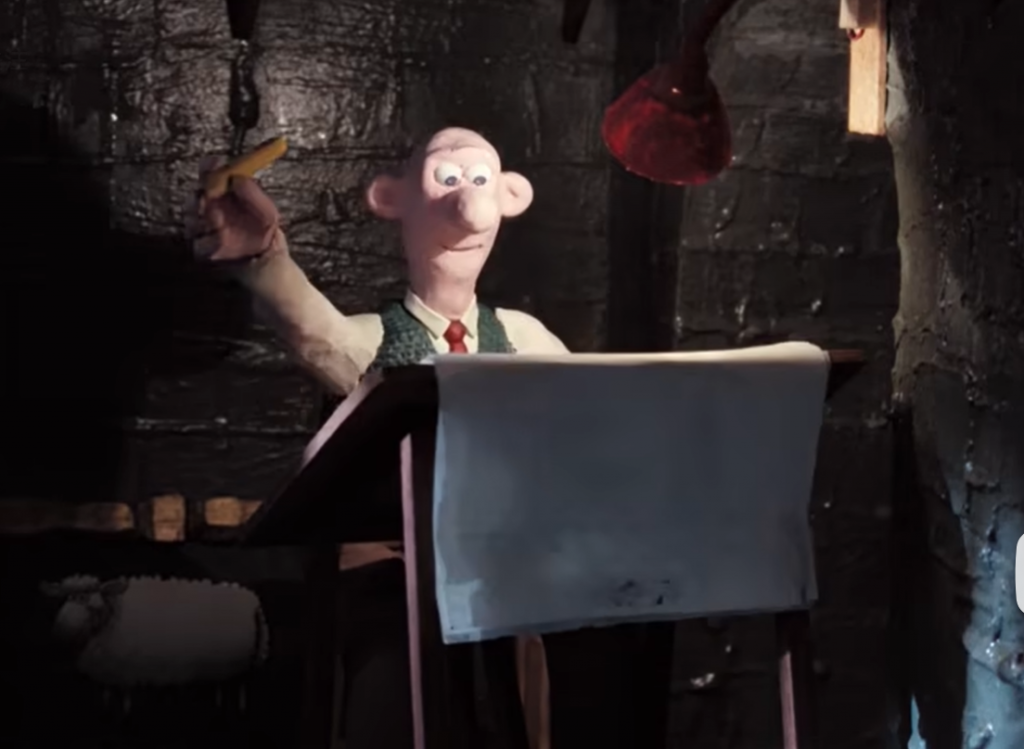
2. Before drawing the final sketch, Wallace made a large gesture with his arm. This action was very different from his previous actions. Therefore, this large gesture effectively attracted the audience’s attention and made them anticipate his subsequent rocket design.
I think there are areas that need improvement for this action: When Wallace was drawing the sketches, the movement of his upper arm did not follow the normal movement pattern of a human’s upper arm. The biggest problem lies in his upper arm structure. In the simplified stop-motion animation character body, the important connection point between the upper arm and the body is the shoulder joint.
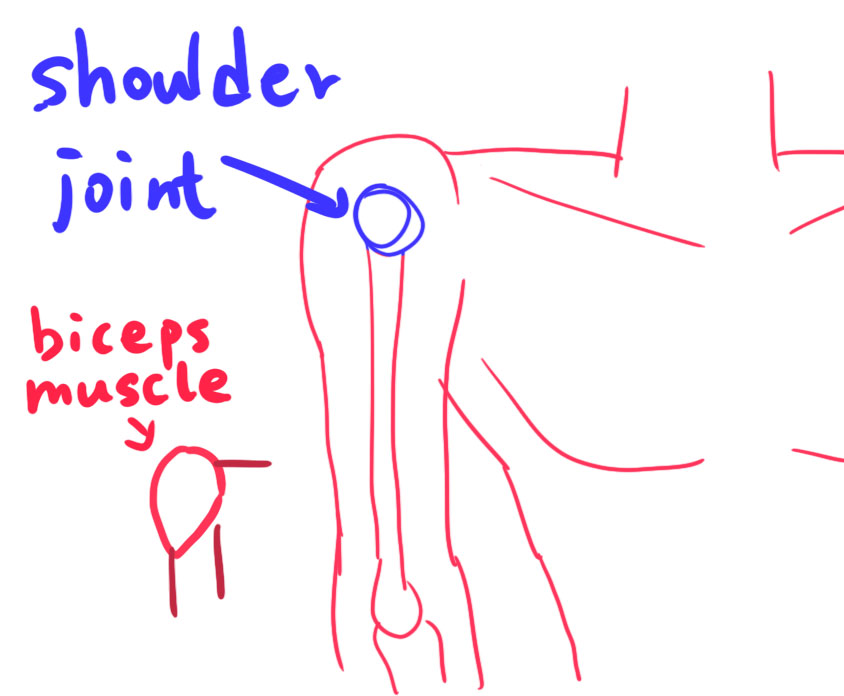
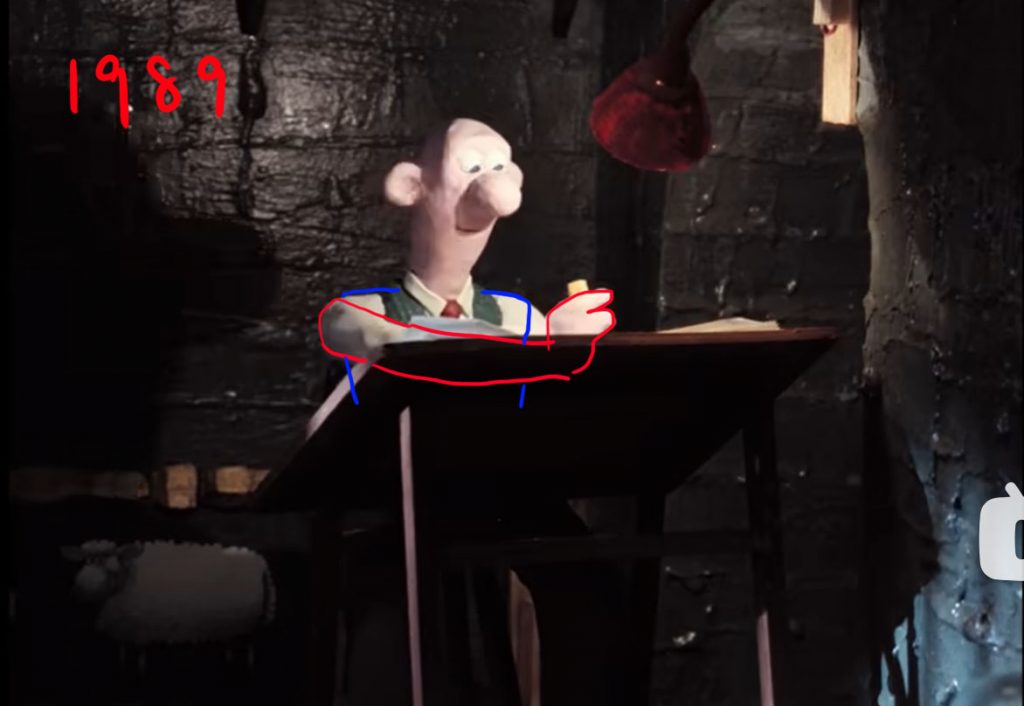
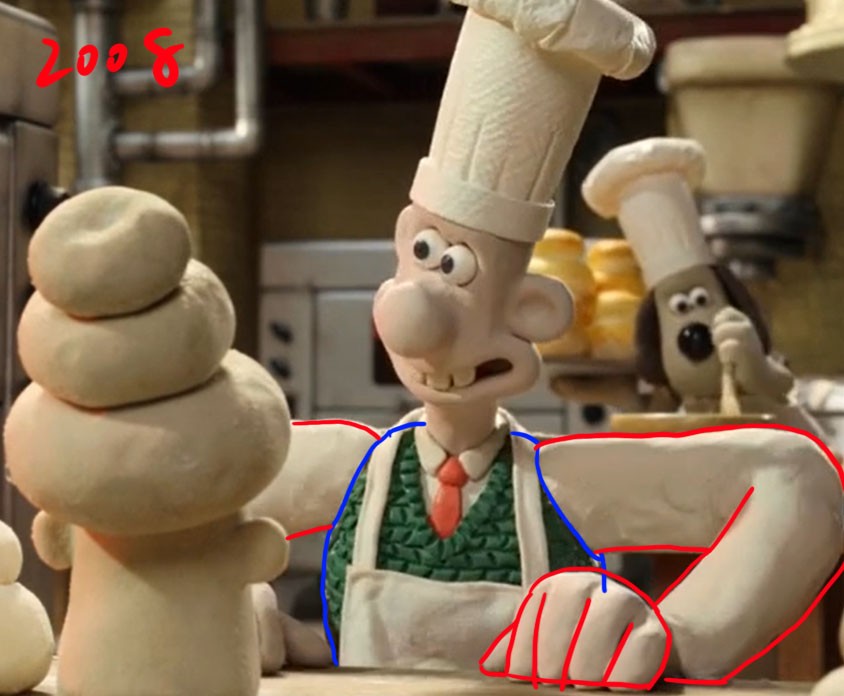
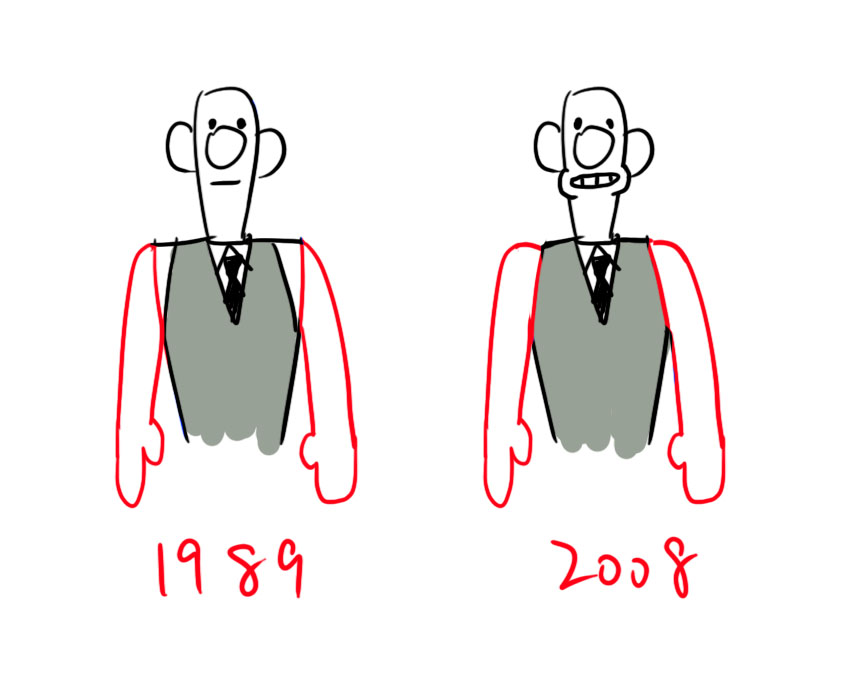
If Wallace lifts his arm, the biceps muscle connected to the shoulder joint also needs to move along with the upper arm. However, due to his incorrect body design, he was unable to make the biceps muscle move. Later, the director also became aware of this issue. In the subsequent works after Wallace & Gromit, they redesigned Wallace’s shoulder and neck structure so that his actions would be closer to the movement patterns of a real human body. I noticed this and applied this rule to my own character designs.
Leave a Reply